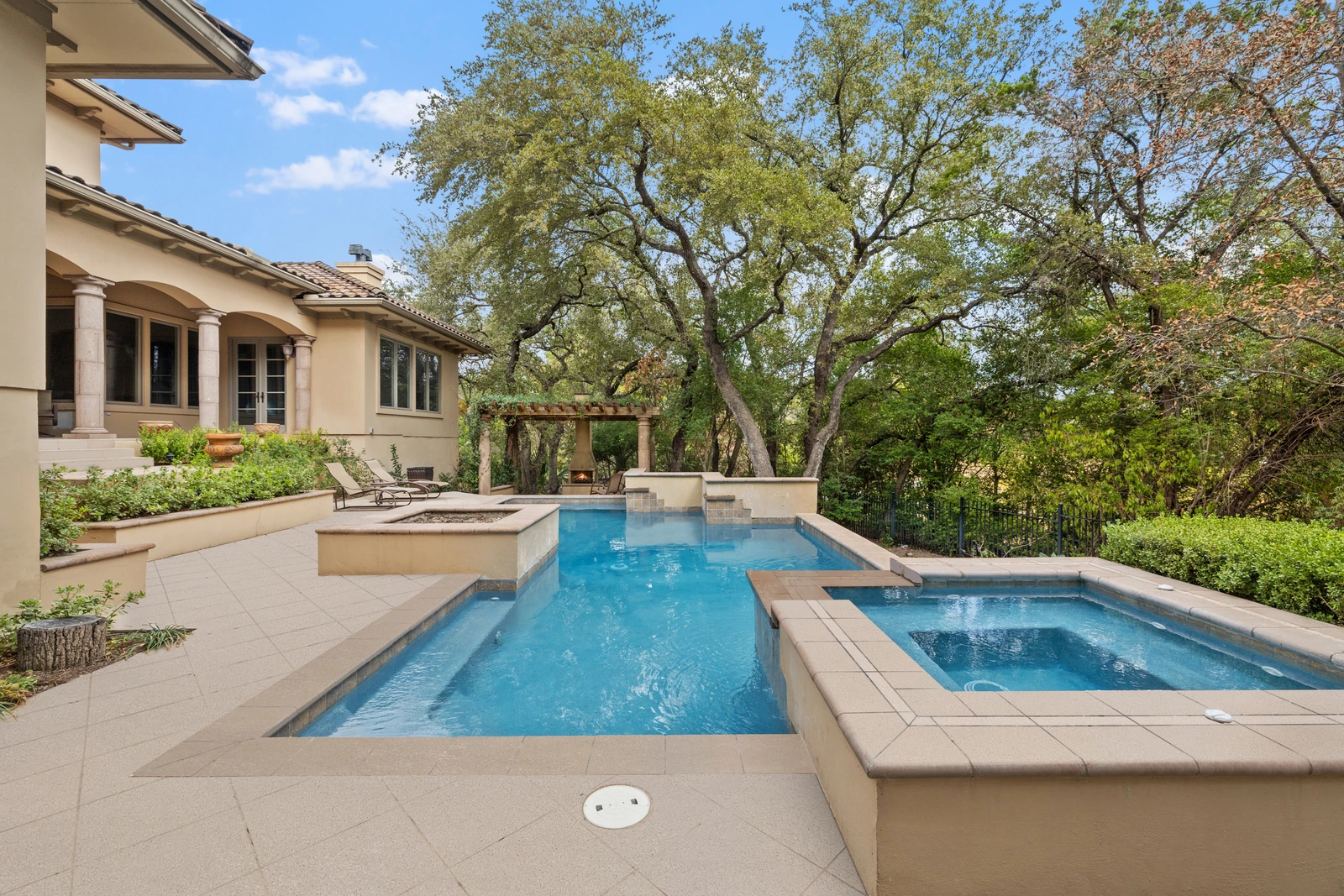
WHAT WE DO
Custom Pool Construction in Austin, TX, Built for Clients Who Know the Difference
Custom pool construction for existing maintenance clients. Referral-based and boutique, not a high-volume build shop.
Existing Clients Only
We Only Build and Renovate for Clients We Know
Building or renovating a pool is one of the larger investments a homeowner makes in a backyard. New construction at Max Pools Austin is offered only to existing maintenance clients, on purpose.
By the time a build starts, Max already knows the property, the equipment, and how the family actually uses the backyard. That relationship is what keeps a build referral-based and boutique rather than a high-volume operation juggling several jobs at once.
Our Difference
What Makes Our Builds and Renovations Different
One Project at a Time
Max never juggles multiple major builds. Your project gets his full attention until it is done.
Full Cost Transparency
A clear estimate before work starts. No upsells you do not need.
Certified on Every Brand
Manufacturer-certified on Fluidra, Hayward, Jandy, Waterway, Zodiac, and National Pool Tile.
Locally Owned
Austin-based since day one. A mom-and-pop shop that treats every customer like our own.
FEATURED PROJECTS
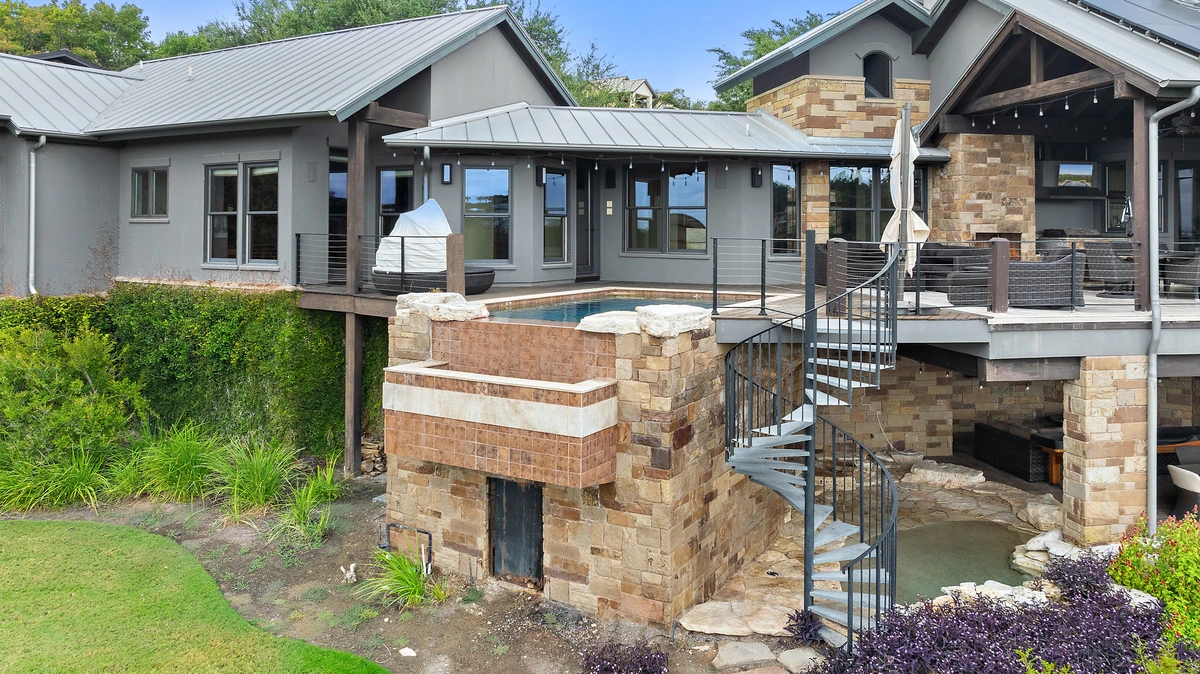
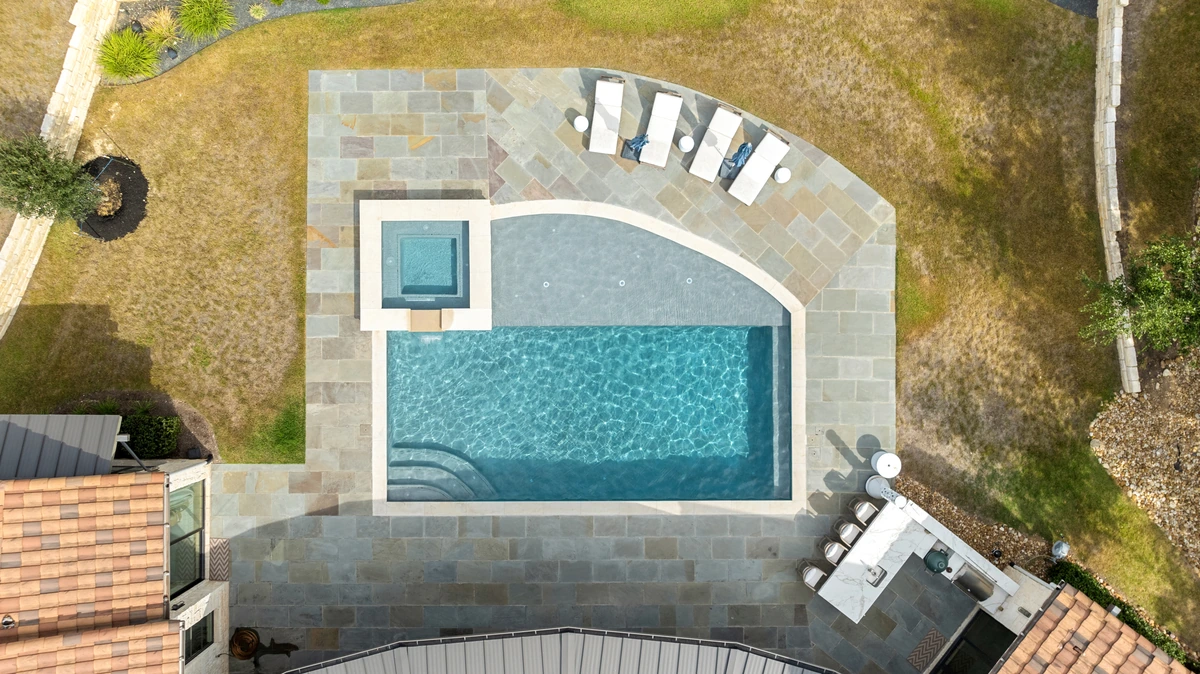
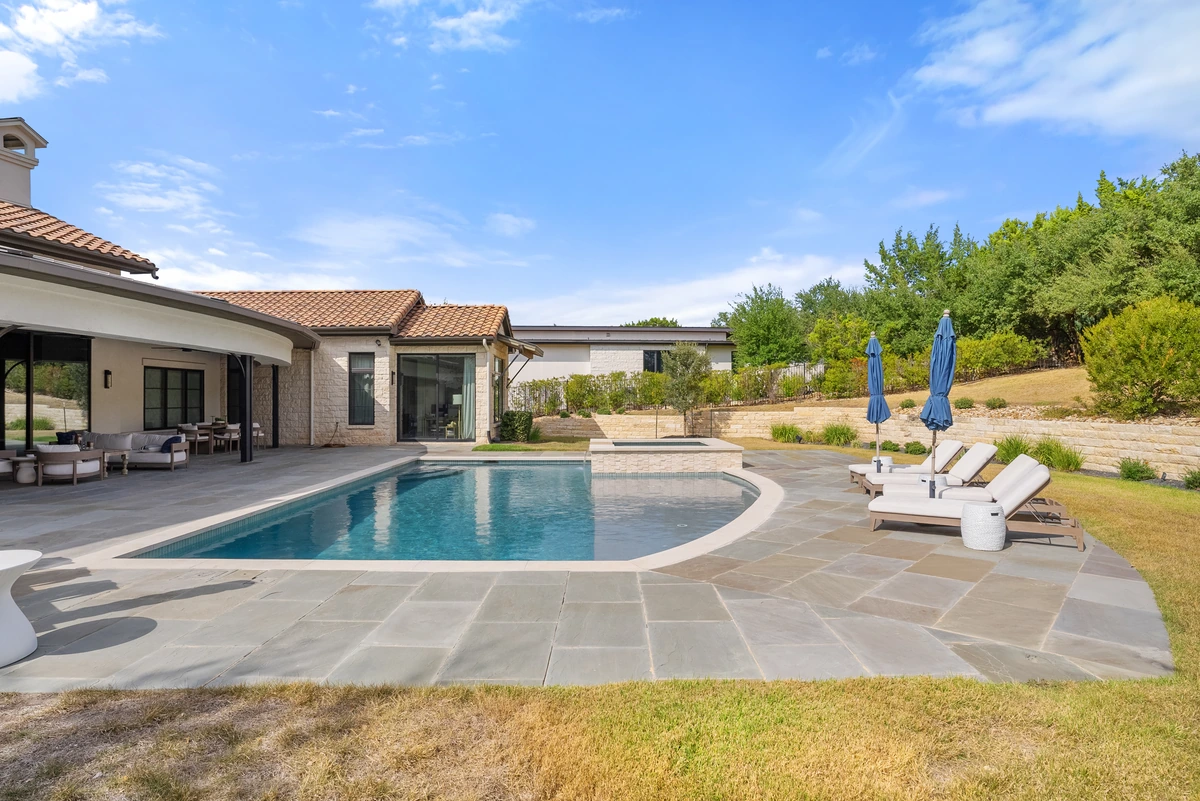
Pools We Have Serviced and Restored
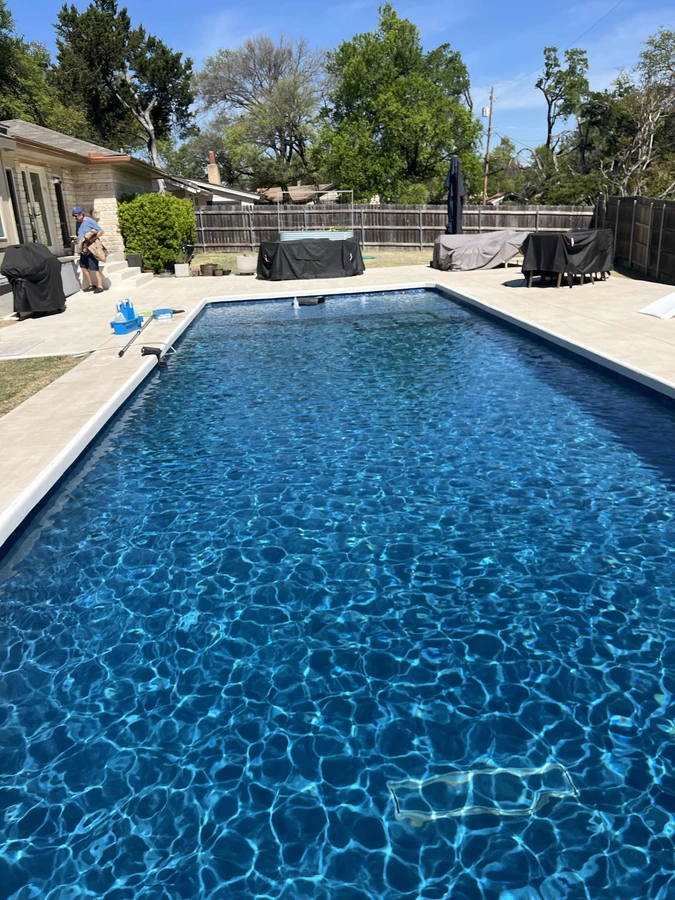
A look at recent work across Austin’s Hill Country neighborhoods.


HOW IT WORKS
A Straight Path From Call to Clean Pool
No pressure, no sales pitch. Just a clear process from first call to finished work.
Step 1
Call or Text
Reach out and tell us what you need, maintenance, a repair, or something bigger. No pressure, no sales pitch.
Step 2
Free On-Site Inspection
Max comes out, looks at your pool, and gives you a straight answer. If it is a quick fix, he tells you. If it needs more, you get an honest estimate.
Step 3
Clear Plan
You get a straight answer on scope, timeline, and price before any work starts.
Free InspectionBefore any quote
Step 4
Service Starts
Once you are in, you are in. Consistent weekly service, clear communication, and a pool you actually want to swim in.
QUESTIONS
Frequently Asked Questions
Max Pools Austin provides weekly pool maintenance, repair, and boutique construction across the greater Austin, TX metro and the Texas Hill Country, including Austin, Westlake Hills, Bee Cave, Lakeway, Dripping Springs, Spicewood, Driftwood, Buda, and Round Rock. Because the client roster is kept intentionally small, Max personally services every route himself rather than dispatching a rotating crew across a wider territory. If your address is close to one of these communities but you are not sure whether it falls inside the current route, call or text and Max will tell you directly rather than leaving you guessing from a generic coverage map.
Pool Construction and Renovation in Austin: How It Actually Works
New pool construction and major renovation are the least standardized part of the pool industry, since every backyard, every budget, and every homeowner’s priorities are genuinely different. Here is a closer look at how a construction or renovation project actually comes together, and why Max Pools Austin structures this side of the business differently than routine maintenance or repairs.
Why Construction Works Differently Here Than at a High-Volume Builder
New pool construction and larger renovations at Max Pools Austin are offered only to existing maintenance clients, and that is a deliberate structural choice rather than a capacity limit. A pool build is one of the largest single investments most homeowners make in their property, and by the time a construction conversation starts, Max already knows the property, the existing equipment, and how the family actually uses the backyard, because that relationship was already built through weekly service.
That is a meaningfully different starting point than hiring a builder who has never seen the property before the first sales meeting. A relationship built over months or years of consistent weekly visits means less time spent on discovery and more time spent on getting the actual design and execution right, since the foundational trust and property knowledge already exist.
It also keeps construction from becoming a high-volume operation juggling many simultaneous projects. Max takes on one major construction or renovation project at a time, which means a build gets direct, sustained attention from the first walkthrough through the final punch list rather than competing for time against several other active jobs.
Renovation Versus Repair: Where the Line Actually Falls
A repair addresses a specific failed or failing component, replacing a pump, fixing a leak, patching plaster, without changing the pool’s overall design or scope. A renovation is a broader undertaking: resurfacing an entire pool shell, replacing waterline tile throughout, upgrading to a fully new equipment package, or adding a feature like a spa or water feature that did not exist before.
The line between the two matters because it changes the entire planning process. A repair typically gets diagnosed and fixed within a single visit or a short follow-up. A renovation requires a design conversation, material selection, a realistic timeline, and often permitting or HOA review depending on the property, well before any physical work begins.
Homeowners sometimes discover partway through a repair conversation that what looked like an isolated fix is actually pointing toward a broader renovation need, aging plaster that has etched significantly over many years, for instance, rather than a single, contained failure. Part of a proper diagnosis on any older pool is recognizing when a repair-sized fix is not going to hold, and being upfront about that rather than patching around a bigger underlying issue.
Planning a Pool Project in the Texas Hill Country
Terrain shapes a construction or renovation project across this part of Texas more than in a flat, uniformly graded subdivision. Hillside lots common in Westlake Hills and Lakeway often require retaining walls, terraced decking, and engineered drainage that a flat-lot project never has to account for, and any renovation touching the pool structure on a hillside property needs to account for how it interacts with existing retaining and drainage systems already in place.
Well water is the other major regional factor, relevant across Dripping Springs, Spicewood, and Driftwood in particular. Hard well water changes which equipment choices make sense at the design stage, since not every heater, filter, or salt cell holds up equally well against sustained mineral exposure, and a construction or renovation project in a well-water area should factor hardness-appropriate equipment selection into the plan from day one rather than discovering the mismatch after the first hard-water season.
HOA and deed-restriction review is a factor across many of the newer, planned communities in Bee Cave, Buda, and parts of Round Rock, where design standards on fencing, equipment screening, and construction timelines are common. Starting that review process early, before design work is fully locked, avoids the more expensive scenario of redesigning around a restriction discovered late.
Materials and Equipment: What Actually Holds Up Long-Term
Plaster, pebble finishes, and tile each carry different maintenance profiles and different expected lifespans, and the right choice depends on water chemistry, usage pattern, and budget as much as aesthetic preference. A well-water property, for instance, benefits from finish and equipment choices that resist hard-water scale better than a system installed with only municipal-water conditions in mind.
Equipment selection at the construction or renovation stage has downstream consequences for years of maintenance and repair afterward. A variable-speed pump and a properly sized salt system chosen and installed correctly at the outset tend to run more efficiently and fail less often than equipment selected purely on upfront cost. This is where manufacturer certification across Fluidra, Hayward, Jandy, Waterway, Zodiac, and National Pool Tile products becomes directly relevant to a construction conversation, not just to repairs after the fact.
For a renovation specifically, reusing existing equipment that has already shown wear, a scaled heater, an aging pump, inside an otherwise fully updated system is rarely a good trade. Replacing already-compromised components as part of the renovation, rather than working around them, is usually what determines whether the renovated system actually performs to the standard the rest of the project was built to.
Why Staying Referral-Only Changes the Outcome
A referral-only, existing-clients-only construction model means every project starts from an established baseline of trust rather than a first meeting. That matters most during the inevitable moments in any construction project where an unexpected condition gets discovered mid-build, whether a plumbing run does not match the original assumption, or a hillside lot reveals a drainage issue once excavation starts. A homeowner who already has a working relationship with the person managing the project tends to navigate that kind of surprise with far less friction than one meeting the builder for the first time under pressure.
It also means the construction side of the business never needs to chase volume to stay busy, since it draws exclusively from an already-engaged client base rather than needing a constant stream of new leads. That structural reality is what allows a strictly one-project-at-a-time approach to actually hold up in practice rather than becoming an unofficial promise that quietly slips once a second or third job gets signed.
For homeowners not yet on a maintenance plan who are interested in a future build or renovation, the practical path in is straightforward: start with weekly maintenance or a repair project, and construction eligibility follows once that working relationship is established. It is a slower on-ramp than calling a builder cold, but it is also the mechanism that keeps every construction client getting the same level of direct, personal oversight.
What the Process Looks Like, Start to Finish
A construction or renovation project typically begins with an in-person walkthrough of the property once a client is eligible, covering the existing site conditions, terrain, access, and, for a renovation, the current condition of the shell and equipment being replaced or upgraded. That walkthrough is where realistic scope, materials, and sequencing get discussed honestly, before any design work is finalized.
From there, a detailed plan gets built around the property’s actual constraints, HOA review where applicable, well-water-appropriate equipment selection where relevant, and terrain-specific engineering on hillside lots, rather than a generic template applied regardless of site conditions. Because only one major project runs at a time, that plan gets Max’s direct oversight through every stage rather than being one of several jobs competing for attention on a given week.
The project closes with a final walkthrough against the original plan, confirming the finished build or renovation matches what was scoped and agreed to before work began. Because the client relationship continues afterward through the same weekly maintenance service that made the project possible in the first place, the pool does not just get handed off and forgotten. It moves straight into the same standing weekly care that built the relationship that led to the project in the first place.
Construction and Renovation Across the Austin Metro and Hill Country
Existing maintenance clients across Austin, Westlake Hills, Bee Cave, Lakeway, Dripping Springs, Spicewood, Driftwood, Buda, and Round Rock are all eligible for construction and renovation projects once that relationship is established. The specific considerations shift by area, hillside engineering in Westlake Hills and Lakeway, well-water equipment choices in Dripping Springs, Spicewood, and Driftwood, HOA review in Bee Cave, Buda, and parts of Round Rock, but the same one-project-at-a-time, owner-led standard applies everywhere on the route.
For homeowners already on a Max Pools Austin maintenance or repair account anywhere in this service area who are starting to think about a future build or renovation, the next step is simply a conversation about what the property and the budget can realistically support. For those not yet a client, weekly maintenance or a repair call is the starting point that eventually opens the door to construction down the line.
That path in can feel slower than simply calling a general contractor and getting a bid the same week, and it is slower, by design. The tradeoff is a construction or renovation partner who already understands the property, has already earned trust through ordinary weekly service, and has every incentive to protect that relationship rather than treat a build as a one-time transaction. For a decision this size, in a backyard that will be lived in for years afterward, that tradeoff is usually the right one.
One playbook does not fit every Austin pool
Austin carries the widest range of pool ages and pool types of any area on the route. Central neighborhoods hold plaster pools that are decades old, built long before today’s variable-speed pumps and salt systems existed, alongside newer backyard renovations that layered modern equipment on top of an old shell. Farther out toward the growth corridors, subdivisions from the last fifteen years carry gunite and fiberglass pools built to a more standardized spec. Servicing Austin means adjusting the approach pool by pool rather than assuming one playbook fits the whole city, and it means the crew has seen close to every equipment combination the metro has to offer.
Pool ownership across Austin
An older plaster pool in a central Austin neighborhood behaves differently than a five-year-old build in a suburban subdivision. Aging plaster etches and stains in ways that change chemical demand month to month, and older pools are more likely to be running equipment that has been patched and replaced piecemeal over the years rather than installed as a matched system. That history matters when diagnosing a repair, since a pump replaced in 2019 next to a filter from 2011 does not always talk to the same automation the way a fully matched system would.
Newer Austin builds tend to run tighter automation, energy-efficient variable-speed pumps, and salt chlorination as the default rather than the exception. These systems are generally lower-maintenance week to week, but when something does go wrong, the fix usually involves a specific board, sensor, or cell rather than a simple mechanical part. Recognizing which category a pool falls into on the first visit shapes both the maintenance plan and the repair approach from day one.
Central Austin also has more homes where a pool has changed hands with the property, sometimes more than once, and where the equipment history is not fully known by the current owner. Part of the first visit to any new client’s pool in Austin is building that history back up: reading serial numbers, checking install dates where visible, and noting anything that looks like a past patch job rather than a proper repair. That record becomes the baseline for every visit after it.
Backyard size and layout also vary more in Austin than in most newer suburbs, since older neighborhoods were platted before pools were a default expectation and additions were fit into whatever space was left. A pool wedged into a smaller central Austin lot sometimes has less room around the equipment pad than a standard subdivision setup, which is factored into how a visit is planned, especially for anything involving parts replacement rather than routine chemistry work.
Weather and water chemistry in an Austin summer
Austin summers run long and hot, often with stretches of consecutive 100-degree days from June through September. Heat accelerates chlorine burn-off and algae growth, which is why a pool that looked fine on a Monday visit can show early algae bloom by Thursday if a filter is starting to lose efficiency or a chlorinator is under-dosing. Weekly maintenance is set up around this reality: water testing and balancing, skimming and brushing, and filter checks every visit rather than a lighter seasonal schedule.
Central Austin’s municipal water supply is generally softer than the well water found farther out toward the Hill Country, which simplifies some of the scale-related maintenance work but does not remove the need for consistent chlorine and pH management through the hottest months. A pool that sits untouched for even a week or two in peak summer can go from clear to green fast, which is the core argument for a standing weekly plan rather than reactive, as-needed visits.
Winters in Austin are mild but not frost-free, and a handful of freeze events most years put older, un-winterized equipment at risk. Weekly visits taper as pool use drops through the colder months, but equipment checks continue, since a cracked pump housing from an unexpected February freeze is a far more expensive fix than a preventive check the week before a cold snap.
Spring in Austin brings its own chemistry challenge: pollen season coats pool surfaces in a fine yellow film for several weeks each year, which changes filter demand even before the real summer heat arrives. Accounting for that seasonal swing, rather than running the exact same routine year-round, is part of what keeps a pool from falling out of balance during the shoulder seasons.
Weekly maintenance in Austin
Weekly maintenance plans in Austin are priced depending on pool size and equipment, and cover water testing and balancing, skimming and brushing, filter checks, and equipment inspection on every visit. The goal on each stop is the same regardless of neighborhood: leave the water balanced and leave a clear record of anything that needs attention before it becomes a repair call. For older pools with more equipment quirks, that inspection step often catches small issues, a slow leak at a union, a pump starting to run loud, before they turn into an emergency.
Because Austin properties vary so much in age and layout, the first month of service on a new Austin account usually involves a bit more note-taking than a straightforward newer-subdivision pool elsewhere on the route. That upfront work pays off; once the pool’s quirks are documented, every following visit runs faster and catches problems sooner.
Austin’s density also means a maintenance route through the city touches more neighborhoods in a single day than a similar route through a spread-out Hill Country town, which keeps the weekly schedule efficient without cutting the actual time spent at each pool. Every stop still gets the same full routine regardless of how tight the day’s route is.
Repairs across Austin’s pool inventory
Repair work in Austin spans the full range from decades-old plaster pools running mismatched equipment to newer builds with variable-speed pumps and salt systems still under warranty. Most repair calls get an on-site inspection the same day or the next business day, and the crew is certified on Fluidra, Hayward, Jandy, Waterway, and Zodiac equipment, which covers the large majority of what shows up across Austin’s pool stock regardless of the home’s age. Leak detection, pump and filter repair, tile and plaster work, and equipment diagnosis are handled with the same diagnosis-first approach: identify the actual failure point before recommending a fix, rather than defaulting to a full equipment swap.
On older Austin pools, a repair call sometimes turns up more than one issue at once, since equipment that has never been serviced together tends to fail out of sync. In that situation the inspection covers the full system rather than just the reported symptom, and any additional findings get flagged clearly before work starts, not added as a surprise on the invoice.
Construction for existing Austin clients
New pool construction is offered only to existing maintenance clients across the Austin service area. It is referral-based and one project runs at a time, so a build gets direct oversight from Max rather than being one of several jobs a crew is juggling simultaneously. This is not a high-volume build operation; it is a smaller, second offering for homeowners who are already on the weekly maintenance route and trust the relationship enough to bring a bigger project into it.
For an Austin homeowner on a central, older lot considering a renovation rather than a full new build, the same one-project-at-a-time approach applies. Renovations on established Austin pools sometimes involve more unknowns than a clean-slate new build, whatever the original construction and past repairs left behind, and the referral-only structure means that discovery process happens with the same person who already knows the pool from weekly service, not a crew starting from zero.
What the first visit to an Austin pool looks like
A new Austin account starts with a full walk of the equipment pad before any chemistry work begins: pump model and age, filter type and last-known service, chlorination method, and any visible patch jobs from past repairs. That baseline gets written down so every following visit is measured against what is actually installed rather than a guess based on the home’s age or neighborhood.
The first test also checks for anything a homeowner may not have flagged directly, a slow leak at a union fitting, a pressure gauge reading outside normal range, or a salt cell nearing the end of its service life. None of that changes the quoted monthly rate, but it does mean the first visit sometimes runs longer than a standard weekly stop while that record gets built. After that, the routine settles into the standard weekly check: water testing and balancing, skimming and brushing, filter checks, and an equipment glance, with the account’s specific history already on file.
Get in touch
Across Austin’s full mix of decades-old plaster pools and newer subdivision builds, the constant is who shows up: Max personally, on every route, whether that is the first walk of an unfamiliar equipment pad or the final check on a repair. There is no dispatcher assigning your pool to whoever is nearest and no rotating crew relearning its history each visit.
If an Austin pool needs weekly attention, a repair diagnosis, or you are already a maintenance client thinking about a future build, reach out to talk through the pool and the schedule. Same-day or next-business-day inspection is standard for repair calls, and new accounts are added as the route allows, no long-term contract required to start.

GET STARTED
Work With a Pool Company That Actually Shows Up
Max Pools Austin is currently accepting new maintenance clients in the Greater Austin area. Spots are limited on purpose.
 4.6(31)
Talk to Max
We treat our customers like they are our own, with our mom-and-pop shop. When you reach out, you are talking directly to MAXWELL CONKLIN and his team. We make every effort to respond the same day.
Check your zip code
Do we service your area?

You will hear back from MAXWELL CONKLIN directly.